
Lone Star Diesel: Connecting Dieseltron, Website UX, and Local SEO
Explore Dieseltron, service-focused website content, local-market pages, and lead systems in the Lone Star Diesel project, with clearly defined evidence.
What you’ll take away.
- Distinguish shop service from mobile or roadside needs.
- Use Dieseltron to support service understanding.
- Keyword planning and ranking results are different evidence.
Two visual guides to the key ideas.
Use the diagrams below, then continue into the practical guide.
Help different service needs find a path
A conceptual service-routing diagram. It does not promise availability, eligibility, or a response time.
Planning is different from proven results
The public portfolio documents 999 mapped keyword targets. This is a planning deliverable, not evidence that 999 keywords rank or generate leads.
Lone Star Diesel illustrates a connected brand and website engagement for a diesel-service business. The work brings Dieseltron, service information, local-search architecture, interactive guidance, and lead handling into the same customer journey.
- 01ChooseDistinguish shop, mobile, and commercial needs
- 02NavigateConnect the service question with a relevant page
- 03Follow upDeliver the inquiry to a responsible person
A planning framework, not a prediction or a guaranteed result.
The business challenge
Diesel customers can arrive with different needs: evaluating an in-shop service, looking for mobile help, or researching support for commercial vehicles. The website needs to distinguish those needs clearly so visitors can choose an appropriate next step.
Give the brand a recognizable guide
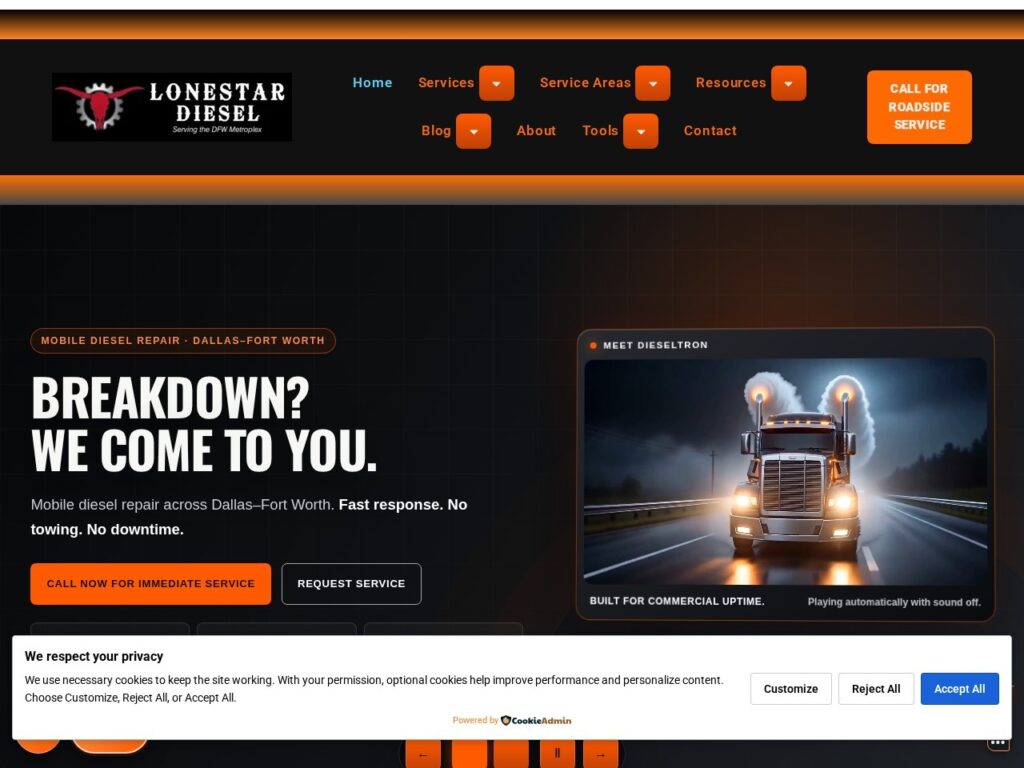
Dieseltron provides a recurring character for the visual identity and educational experience. The character supports service communication across website artwork and campaign materials. Its role should remain connected to practical customer information rather than compete with contact actions.
Align the website with service intent
The implementation connected service-focused pages, DFW market coverage, internal links, technical SEO, and interactive guidance. The Dieseltron Service Navigator is part of that approach: help a visitor move from a vehicle or service concern toward a more relevant service path.
Shop-based diesel service and mobile or roadside needs deserve clear explanations. Location content should support genuine coverage and the relevant service, without implying a separate physical shop in each market.
Connect inquiries to follow-up
A useful service website needs more than a visible contact button. Forms, calls, confirmations, and the responsible follow-up process must work together. Test activity should be identifiable so it can be separated from actual prospect inquiries when reviewing performance.
What the published project details establish
The Lion Crown portfolio describes the Dieseltron, web, SEO, and lead-system scope and records 999 mapped keyword targets. A keyword map is a planning deliverable. It is not evidence that every target ranks or generates leads.
Current rankings, organic inquiries, advertising conversions, and closed work require their own reporting periods and measurement sources. This case study does not assign a revenue result or claim that a technical implementation guarantees a search position.
Lessons for a service-business website
- Organize the journey around the customer's actual service need.
- Keep critical call and inquiry actions usable on mobile.
- Use a mascot consistently as a guide and brand asset.
- Connect location pages with appropriate services and evidence.
- Evaluate search visibility and qualified business outcomes separately.
Explore the work and related guidance
Visit Lone Star Diesel. Read website redesign versus SEO and how to interpret a local SEO audit. Explore Lion Crown web design, SEO expansion, and lead generation and automation.
Request a project review to identify a useful starting scope for your own service business.
| Workstream | Implementation evidence | Outcome to measure separately |
|---|---|---|
| Brand and mascot | Dieseltron assets and service communication | Recognition and customer response |
| Search planning | 999 mapped keyword targets, as documented in the portfolio | Relevant rankings and organic inquiries |
| Website and lead systems | Usable service paths and working inquiry delivery | Qualified opportunities and closed work |
Put it to work
List the service needs your site must distinguish, then check which page answers each one.
YOUR NEXT STEP